

 Meine Favoriten
 Abmelden
 Registrieren
 Weltwoche Deutschland


 Anhören ( 4 min )
 Switzerland has long exercised an influence on the global economy far greater than its size might suggest. That influence is built not only on the strength of Swiss industry, finance and innovation, but on a distinctly Swiss ability to defend national interests while remaining deeply engaged with the world.
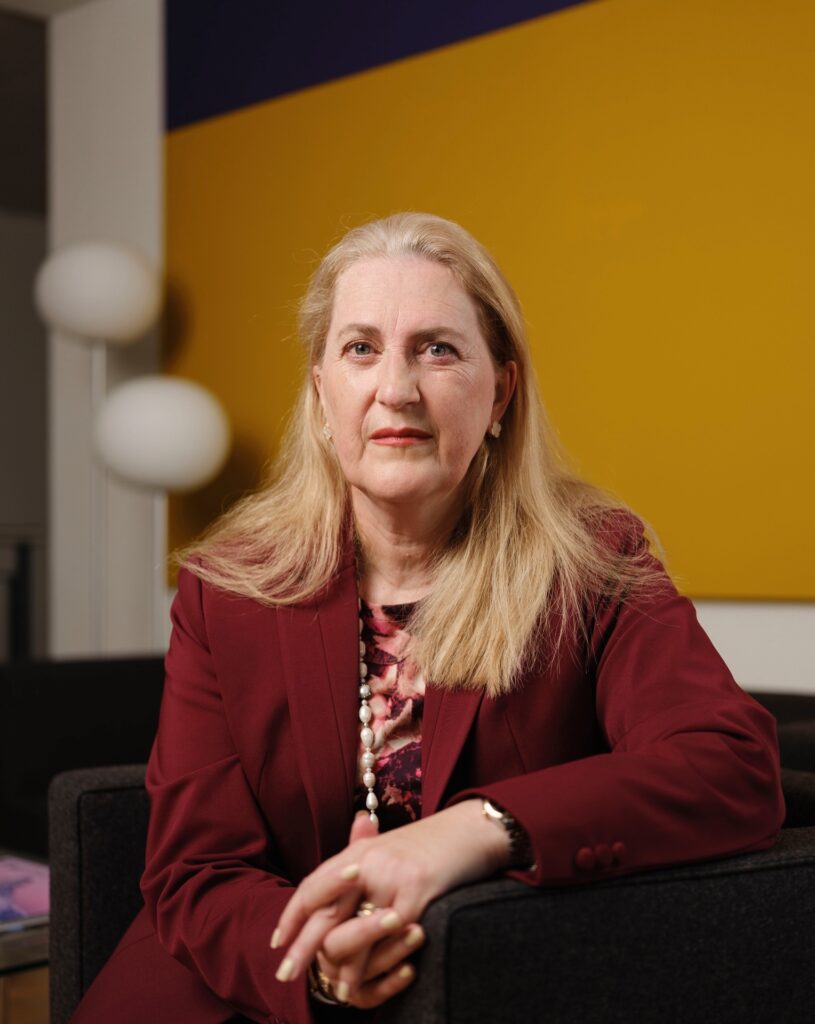
© KEYSTONE / CHRISTIAN BEUTLER
I saw the value of that approach firsthand while serving as United States Ambassador to Switzerland and Liechtenstein during President Donald Trump’s first administration. At a time when Washington was reconsidering many of the assumptions that had governed international trade for decades, Switzerland proved a serious, sophisticated and pragmatic economic partner.
Two Swiss leaders have been particularly important to that success: Marie-Gabrielle Ineichen-Fleisch and Helene Budliger Artieda.
I had the privilege of working with Mrs. Ineichen-Fleisch during my time in Bern. Our governments were then exploring the possibility of a deeper bilateral trade relationship—an objective very important to US-Swiss interests.
Those discussions were often complex. Agriculture, tariffs, and market access presented real differences. What impressed me about Mrs. Ineichen-Fleisch was her ability to be both a determined advocate for Switzerland and a pragmatic negotiating partner. She understood that successful economic diplomacy does not require countries to have identical interests. It requires them to identify where their interests align and then do the difficult work necessary to make progress.
That approach characterized her tenure at the State Secretariat for Economic Affairs. During roughly eleven years as State Secretary, and following years representing Switzerland at the WTO, she helped Switzerland navigate the European sovereign-debt crisis, profound changes in international trade and, ultimately, the economic disruption caused by the pandemic. Around twenty free-trade agreements were concluded during her tenure, and had it not been for covid I am confident the US-Swiss bilateral talks would have produced successful trade agreements.
Helene Budliger Artieda continued that tradition after assuming leadership of SECO in 2022.
The results are substantial. Under her leadership, Switzerland concluded important free-trade agreements with India, Thailand, Malaysia, Kosovo and Mercosur. Negotiations were completed on a new agreement with Vietnam and on modernizing agreements with the United Kingdom and China. She also helped forge consensus among Switzerland’s partners on elements of the Switzerland-EU package, while always protecting Swiss sovereignty.
More recently, Mrs. Helene Budliger Artieda has been called upon to navigate one of the more difficult periods in recent U.S.-Swiss trade relations.
The past year has tested the economic relationship between our countries. President Trump’s trade agenda has challenged longstanding assumptions about global commerce, and Switzerland has not been immune from that change. Yet the response has demonstrated something important: mature partnerships are not defined by an absence of disagreement, but by the ability to address disagreements pragmatically. Through close relationships Mrs. Budliliger Artieda has cultivated great respect in the US.
The underlying relationship between Switzerland and the United States remains remarkably strong. Our countries are major investors in one another’s economies, support hundreds of thousands of jobs, and share deep commercial, diplomatic and cultural ties.
Switzerland itself has also demonstrated considerable resilience. Despite a difficult international environment, its economy has continued to grow and compete successfully in some of the world’s most sophisticated industries. Your businesses continue to invest and grow in the United States benefitting from the largest consumption economy in the world. As I've often said Switzerland is the diamond in the midst of Europe.
These realities make the coming transition at SECO especially important.
Mrs. Helene Budliger Artieda has announced that she will step down next March, a true loss for Switzerland. Her successor will inherit a global trading system considerably less predictable than the one that existed a decade ago: negotiations with Washington, an evolving relationship with a struggling Europe, growing protectionism and increasing geopolitical pressure on international commerce.
For Switzerland, navigating these challenges is not an abstract exercise. An open, export-oriented economy depends upon access, predictability and trusted relationships beyond its borders.
Mrs. Marie-Gabrielle Ineichen-Fleisch and Mrs. Helene Budliger Artieda understood this exceptionally well as did two important Federal counselors who worked with and supported them: Mr. Schneider-Aman and Mr. Parmelin–great leaders who recognized the value of these bright and valuable trade experts.
As a former American Ambassador and a longtime admirer and friend of Switzerland, I am grateful for their service and for the professionalism Marie- Gabrielle and Helene brought to the U.S.-Swiss relationship. Their careers demonstrate a particularly Swiss form diplomacy: serious, pragmatic outward looking and firmly grounded with national interest. Through close relationships-Mrs. Helene Budliger Artieda has cultivated great respect in the US. She is a trusted expert among the highest levels of US trade leaders.
Their successor will have the important task of preserving that tradition while adapting it to a world that is changing rapidly.
Ambassador McMullen is Chairman of McMullen Holdings, serves on several corporate boards of directors, and is Vice Chairman of the American Swiss Foundation. He is the former U.S. Ambassador to Switzerland and Liechtenstein.